"Holy Mary" Metro Station Opens in Tehran: A Meeting of Religions and Cultures
Tehran’s 'Holy Mary' metro station isn't just another stop underground; it’s a symbolic gateway for dialogue between cultures, religions, and people. It’s a place where commuters—whether intentionally or just for a fleeting second—can glimpse the possibility of a more peaceful world.
BLOGCULTUREIRAN
11/7/2025
There is a new metro station that everyone around the world is talking about—not just as a transit hub, but as a symbol of religious and cultural dialogue.
Over the past few weeks, Tehran, a metropolis of over ten million people, hasn't been making headlines for its traffic jams or political news. Instead, it's because of a new metro station with a name that surprised quite a few people: "Holy Mary" (Maryam-e Moqaddas). After photos and videos flooded social media, a lively global debate kicked off. People are wondering: is this gesture a sign of religious openness, a deliberate political message, or a sophisticated cultural project weaving religious symbols right into the fabric of the city's infrastructure?
The station is located on Metro Line 6, not far from St. Sarkis Armenian Cathedral, which is one of Tehran's most prominent Christian churches. Construction started ten years ago and wrapped up in October 2025, with city officials holding a grand opening to officially welcome the public to this unique new stop.
The Underground Church
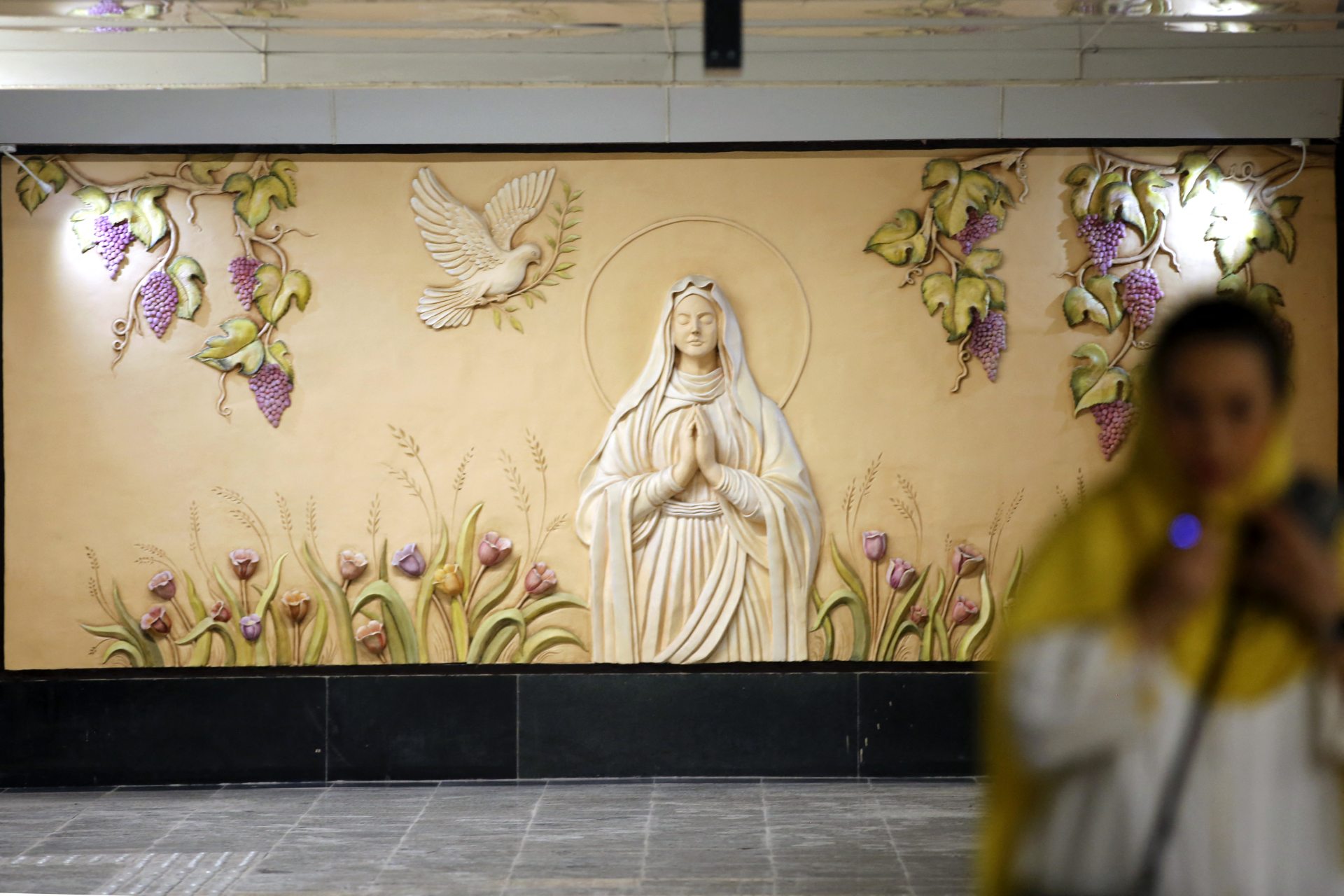
Right off the bat, the "Holy Mary" station looks nothing like your typical subway architecture. The gilded arches curving over a domed hall, the frescoes, the mosaics, and the blue-and-gold ornamentation on the ceiling all feel like a blend of traditional Persian and Christian art. The central fresco features the Virgin Mary standing with her eyes closed in deep prayer, while a white dove hovers above her head as a symbol of the Holy Spirit. On one of the platform walls, Jesus Christ appears with a peaceful gaze, looking over passengers as if watching over them while they wait for their trains.
Tina Tarigh Mehr, the lead artist on the project, explained that every little detail was completely intentional:
"The dove represents the Holy Spirit, the olive branch stands for peace and friendship, and Mary's figure symbolizes purity and divine love. Our goal was for anyone passing through this station to feel that Tehran welcomes all religions with respect."
The design beautifully weaves together the delicate touch of Persian ornamentation with the calm of Christian iconography. The play of light, along with the use of marble, mosaic, and bronze, gives the whole space a church-like atmosphere. It’s no wonder many people are already calling it an "underground basilica."
Virgin Mary as a Common Thread
Even though the Islamic Republic of Iran is a Shia state, the Virgin Mary is deeply revered there. In Islamic tradition, Mary—as the mother of the prophet Jesus—holds a very special place. Several chapters of the Quran discuss her, and there is even an entire surah named after her. As a symbol of purity, faith, and divine calling, both Muslims and Christians hold her in high regard.
So, it wasn't surprising when Tehran's mayor, Alireza Zakani, put it this way during the opening ceremony:
"This station honors a woman who woke up the world with her purity and maternal love. It also sends a message that Tehran is a city where religions coexist peacefully."
On Iranian social media, plenty of people welcomed the station's opening as a nice gesture toward religious diversity and cultural dialogue. Others, though, were a bit more skeptical, suspecting some political motives behind it. Either way, the stunning visuals, artistic craftsmanship, and peaceful vibe of the Maryam-e Moqaddas station have definitely caught the world's attention.
A Symbol of Cultural Dialogue
The "Holy Mary" station isn't just another stop on Tehran’s fast-growing metro network; it’s a cultural message. In a country where Christianity, Judaism, and Zoroastrianism are officially recognized religions, choosing this name is a nod to religious pluralism and historical coexistence. Christian communities—especially the Armenian and Assyrian minorities—have been part of Iran’s cultural heritage for centuries.
The nearby St. Sarkis Cathedral has long been the heart of Christian life in Tehran. Its towers, bells, and mosaics fit right into the city's modern skyline, serving as a reminder that Christianity took root in this land long before the arrival of Islam.
Tehran’s metro system was already well-known for turning its stations into art spaces rather than just places to catch a train. You can find Persian motifs, historical decorations, and modern installations all over the city. But the "Holy Mary" station marks a brand new milestone: it’s the very first time a capital city in an Islamic country has named a metro station after a Christian saint and made her iconography the centerpiece of the design.
The Eyes of the World on Tehran
Following the grand opening, the international press—including France 24, AFP, and several European newspapers—covered the event in detail. Some viewed the project as a PR move to boost Iran's image, while others felt that the message of religious and artistic coexistence carried a genuine, deeper meaning.
One thing is for sure: images of the "Holy Mary" station have gone viral, showing a different side of Tehran to many—a city trying to blend modernity and tradition, religion and public life, in a very unique harmony.
Ultimately, Tehran’s "Holy Mary" metro station is more than just a new stop underground; it’s a symbolic gateway for dialogue between cultures, religions, and people. It’s a place where commuters—whether intentionally or just for a fleeting second—can glimpse the possibility of a more peaceful world. Deep beneath Tehran, under the roar of everyday traffic, a quiet message keeps beating: that faith, art, and human respect will always belong together.
PUBLISHED IN
INDEX: https://index.hu/kulfold/2025/11/07/megnyilt-teheranban-a-szent-maria-metroallomas/