Iran Checkmated as Its South American Beachhead Collapses
The axis between Iran and Venezuela never really followed the normal rules of diplomacy. It was an alliance of defiance—a total 'blood pact' between two pariah states.
IRANANALYSISGEOPOLITICS
1/7/2026
History rarely knocks—usually, it kicks the door down. And that is exactly what happened in the opening days of January 2026, when the arrest of Nicolás Maduro by US forces in Caracas became the biggest news story in the world.
Even though this drama played out on the shores of the Caribbean, the shockwaves caused the most panic—and the heaviest strategic loss—twelve thousand kilometers away in Tehran. For the Iranian leadership, the fall of Venezuela's chavista regime isn't just losing a piece on the board; it's having the whole chessboard flipped over. It marks the dead end of their boldest foreign policy experiment of the last quarter-century—the exact moment their carefully built "strategic depth" vanished overnight.
To understand the paralysis gripping Tehran right now, you have to look at the roots of this relationship.
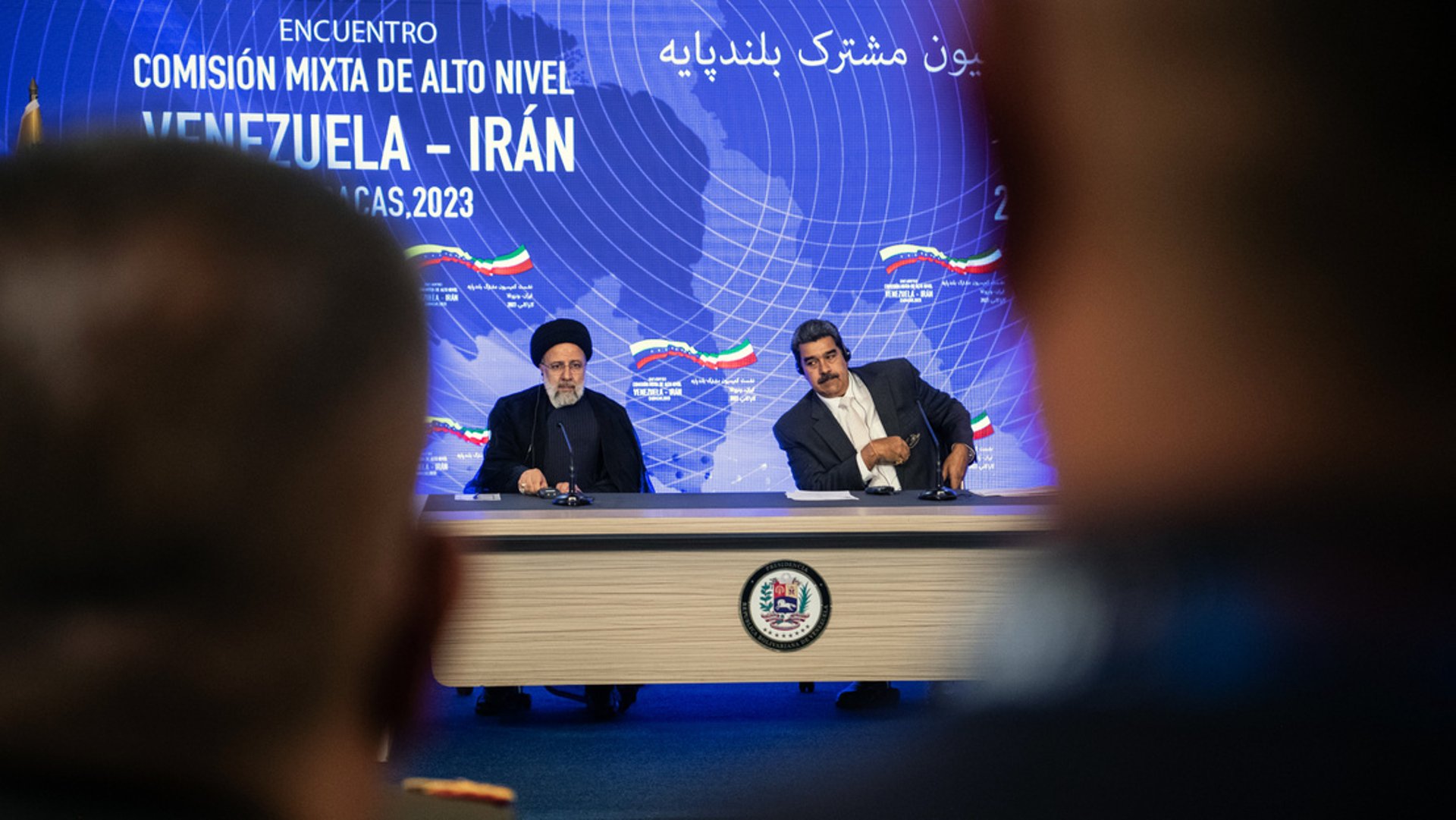
The axis between Iran and Venezuela never followed the classic rules of diplomacy. It was an alliance of defiance—a "blood pact" between two pariah states, held together by a shared, visceral hatred of Washington that dates back to the days of Hugo Chávez and Mahmoud Ahmadinejad.
For Iran, Venezuela was the gateway to breaking out of regional isolation. For decades, Tehran's strategists coddled the illusion that they could stretch their so-called "Axis of Resistance" right into America’s backyard. Venezuela served as their logistical base, their money launderer, and their political megaphone all at once. When Iranian President Masoud Pezeshkian recently called the leadership in Caracas a "true friend," he wasn't just being polite; they genuinely saw each other as a lifeline for survival. Now, that door has slammed shut right on Iran's fingers.
But even worse than the loss of prestige is the financial ruin that comes with this shift.
Tehran’s propaganda machine—along with figures like Majidreza Hariri, head of the Iran-China Chamber of Commerce—is trying to calm everyone down by claiming the money has already been "safely extracted." But the numbers tell a different story. Over the past twenty years, Iran has poured billions of dollars into the bottomless pit of Venezuela. Think back to the Venirauto car plant launched with massive fanfare in 2007 that never delivered, the ghost housing developments, or the desperate 2022 attempt to revive the El Palito refinery. All of those projects are now stuck in no man's land.
The legal reality makes the situation almost tragicomic. Venezuela’s sovereign debt is hovering somewhere between 150 and 170 billion dollars, and the line of creditors stretches from Wall Street investment funds to victims of the Citgo legal case. For a new, Washington-backed democratic government in Caracas, it would be political suicide to pay back Iran—an state sanctioned for sponsoring terrorism—while Western companies are standing in line with US court judgments in hand. Iran isn't just getting pushed to the back of the line; as a creditor, they basically cease to exist. The technology, the expert labor, the capital invested—all of it became an uncollectible debt with a single stroke of a pen.
Yet, there is something keeping the generals of the Revolutionary Guard up at night far more than the central bankers: the opening of the intelligence "black box."
For decades, Venezuela was the perfect safe haven for Iranian operatives and Hezbollah networks. We only had hints of what was happening behind the scenes, but with the regime change, the archives of SEBIN—the Venezuelan intelligence service—and the immigration databases are falling into the hands of the new authorities, and through them, US intelligence.
This is a total nightmare for Tehran. Think about it: for years, Venezuelan passports were handed out to Middle Eastern agents, allowing them to travel freely worldwide. Money-laundering operations thrived, and Iranian drones like the Mohajer and Shahed were being assembled deep in the jungle. If those files leak, it won't just destroy their South American network; it could trigger a global exposure. Sleeper agents could be compromised, and front companies operating for decades could collapse. Iran’s shadow warfare capabilities are about to take a hit that will take years to recover from.
It is no wonder that the reaction in Tehran is a bizarre mix of denial and panic. The regime is absolutely terrified of a domino effect.
They are watching how quickly an economically broken, isolated system can collapse under external pressure. That is why their propaganda machine has gone into overdrive. Friday prayer preachers and parliamentary hawks are desperately trying to paint the Venezuelan opposition with the same brush as their own domestic dissidents. They are drilling home the message that what happened in Caracas wasn't a popular uprising, but a "foreign occupation," and that opposition leader María Corina Machado is reading from the exact same script as the Iranian opposition. But that message isn’t meant for the world; it’s meant for their own increasingly frustrated population, basically saying: "See? Western democracy only brings chaos."
While Foreign Minister Abbas Araghchi protests by invoking international law, his words are falling on deaf ears. Iran’s dream of a "multipolar world order" in Latin America has dissolved. The Persian state has been pushed right back into its own neighborhood, lonelier than ever, forced to face the fact that billions of dollars and ideological brotherhood weren't enough to save a doomed system from the storms of geopolitics. With the fall of Caracas, the air in Tehran hasn't just gotten thinner—it's gotten a whole lot hotter.
PUBLISHED IN
ÖT: https://ot.hu/ujvari-barbara/iran-venezuela/
INEDX: https://index.hu/velemeny/2026/01/07/iran-venezuela-politika-szovetsegesek-osszeomlas/