Iran from A to Z: Why the Empire of the Ayatollahs is Driving the New Middle East Geopolitics
Between its regional proxies, its nuclear and ballistic missile programs, and its growing partnerships with Russia and China, Iran is no longer just a regional player—it has the potential to become a factor of global importance.
IRANGEOPOLITICSANALYSIS
7/7/2025
The Big Picture Beyond the Battlefield
The root causes and fallout of the recent twelve days of intense military clashes between Iran and Israel go way beyond the actual battlefield. Even though there’s a fragile ceasefire in place right now, it could fall apart at any moment, and tensions could easily spike again. Because of that, people are shifting their focus away from the immediate clashes and looking at the deeper geopolitical, economic, and strategic factors that shape Iran’s role on the global stage.
You see, Iran isn't just another regional player. Its history, geographic location, economic resources, and military capabilities give it massive strategic weight. And this isn't just about its political system or its ideological beef with the West; it’s because Iran sits on a goldmine of hydrocarbons, rare earth elements, and mineral reserves. Plus, it acts as a critical geographic bridge connecting the Middle East, Central Asia, the Caucasus, and the Persian Gulf. This makes Iran a key player not just in energy politics, but in global trade and military strategy as well.
It’s no coincidence that Iran has been under constant international sanctions and political pressure for nearly half a century, while other countries that are far more authoritarian—but economically less significant—hardly get the same kind of attention. Iran has made foreign policy independence a core strategic goal, and despite the sanctions, the country hasn't collapsed. Instead, they’ve made major strides in technology and the defense industry, running their own ballistic missile and drone programs while building a massive network of regional influence. If Iran were free of sanctions and economically secure, it could become a true superpower in world politics, which would completely reshuffle the global balance of power.
Geography and Natural Resources as a Superpower Asset
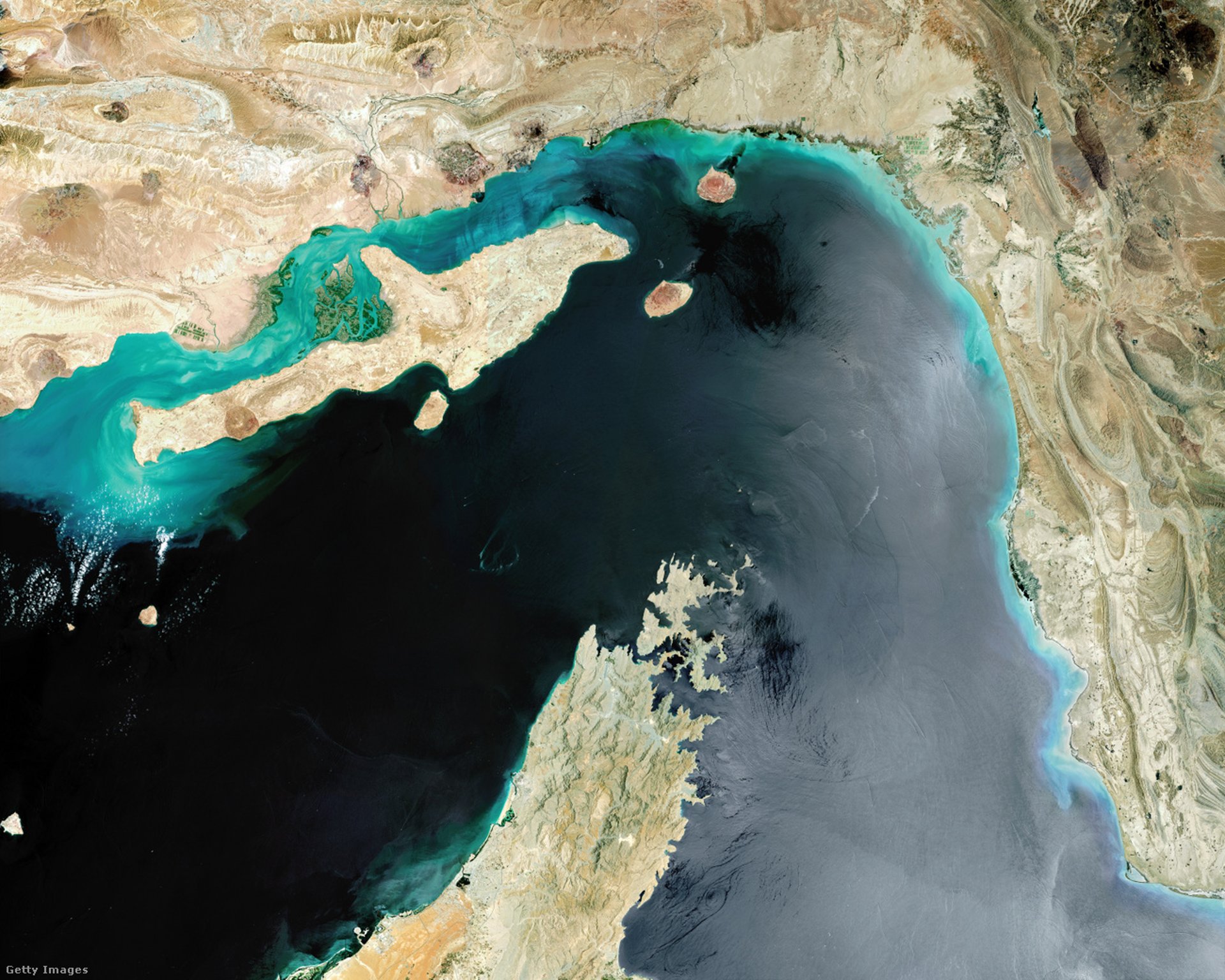
One of Iran’s biggest advantages is simply where it sits on the map. It’s bordered by Turkey and Iraq to the west, the Caucasus and Turkmenistan to the north, Afghanistan and Pakistan to the east, and the Strait of Hormuz to the south. That strait is a massive deal—about 20 percent of the world’s maritime oil shipments pass through that one narrow corridor. This means Iran isn't just an energy giant; it also has potential control over major energy transit routes, which gives the country unparalleled strategic leverage.
Its economy is deeply tied to its natural resources, which are incredibly vast and diverse by global standards. Southern provinces like Khuzestan, Hormozgan, and Bushehr boast massive oil and gas fields, giving Iran the world’s third-largest oil reserves and second-largest natural gas reserves, including the deposits under the Caspian Sea. Meanwhile, central and eastern regions like Kerman and Yazd are packed with iron ore, ranking Iran second in the world for those reserves. Up in the western highlands—places like Lorestan and Hamadan—as well as parts of Sistan and Baluchestan, you find the world's fourth-largest reserves of lithium, a mineral that is going to be absolutely vital in the tech wars of the future.
On top of all that, Iran holds significant reserves of copper, zinc, uranium, manganese, lead, gold, silver, and cobalt—all of which carry immense industrial and strategic value. What’s truly remarkable is that while Iran is only the 17th largest country by landmass, it’s three times the size of France, and its concentration of natural resources outperforms much larger nations. Practically anywhere you look on the map, there’s some kind of valuable raw material. This gives Iran a strong domestic economic cushion and plenty of geopolitical room to maneuver. It makes complete sense why global superpowers find their economic and strategic interests intersecting right here.
Geopolitical Role and Foreign Policy Doctrine
On the foreign policy stage, Iran has spent the last few decades building a doctrine centered on sovereignty, independent decision-making, and deterrence. This is a sharp contrast to the Pahlavi dynasty era, when the country's foreign and economic policies were basically dictated by British and American interests. The 1979 Islamic Revolution changed all that, becoming a symbol of national self-determination and foreign policy autonomy—reshaping not just domestic politics, but how Iran interacts with the region.
By integrating the Shia world, expanding its ideological influence, and pushing an "Iranian model" for regional stability, Tehran has created a whole new power dynamic. Groups like Hezbollah in Lebanon, Hashd al-Shaabi in Iraq, and the Houthis in Yemen are no longer just proxies; they serve as a direct military and strategic counterweight to the Saudi-Israeli-American axis. Iran’s presence in these conflict zones isn't just driven by religion or ideology; it’s deeply strategic. They are looking to reshape the regional balance while expanding their own security perimeter.
How other major global powers view this role is also telling. Russia, for instance, isn't just a military and economic ally to Iran—it’s a strategic partner, especially in the Caucasus. Iran acts as a balancing force between Armenia and Azerbaijan. Tehran has traditionally maintained good ties with Yerevan while successfully keeping Baku’s ambitions in check. This is huge for Moscow, since it considers the Caucasus to be firmly within its own sphere of influence.
At the same time, China doesn't just see Iran as a resource-rich country offering cheap energy. To Beijing, Iran is a crucial land hub for its massive global infrastructure vision, the Belt and Road Initiative. A stable, predictable, and cooperative Iran is a key asset for Beijing—both economically and geopolitically—serving as the gateway connecting East and West, Central Asia, the Caucasus, and the Middle East. This alignment explains a lot: while Western sanctions are designed to isolate Iran, the world's two largest non-Western powers, Russia and China, are doing the exact opposite. They are embracing Tehran as a strategic ally to strengthen their own global positions.
What Lies Ahead
Today, Iran is standing at a historic crossroads, facing a mix of intense challenges and unparalleled opportunities. Despite years of international pressure, sanctions, and regional conflicts, its geopolitical weight, natural wealth, and strategic location remain incredibly valuable. As global power dynamics continue to shift, Iran has a real chance to emerge not just as a survivor, but as an active, dominant player on the world stage.
But to pull that off, the leadership has to strike a delicate balance between maintaining domestic stability, boosting economic growth, and expanding international partnerships. That’s the only way Iran can truly live up to its strategic potential despite constant pushback. Between its proxies, its nuclear and ballistic missile programs, and its tight partnerships with Russia and China, Iran is no longer just a regional factor—it’s a player of global importance.
If it can navigate this critical window, Iran could find itself in a position to shape the balance of power in the Middle East and the wider world for the long haul. If that happens, it won't just be a win for the Iranian leadership's ambitions—it will cement Iran as one of the new cornerstones of international politics for decades to come.
PUBLISHED IN
INDEX: https://index.hu/kulfold/2025/07/07/iran-a-tol-z-ig-geopolitika-szankcio-siita-egyseg/