
The Future of Diplomacy: Saudi Influence, US Guarantees, and the New Middle East
Saudi Arabia has officially entered the club of global geopolitical heavyweights, and its new, more balanced partnership with the United States could very well become one of the defining alliances of the coming decades.
GCCGEOPOLITICSANALYSIS
11/22/2025
The Pomp and the Reality: What Did the Lavish Welcome Mean?
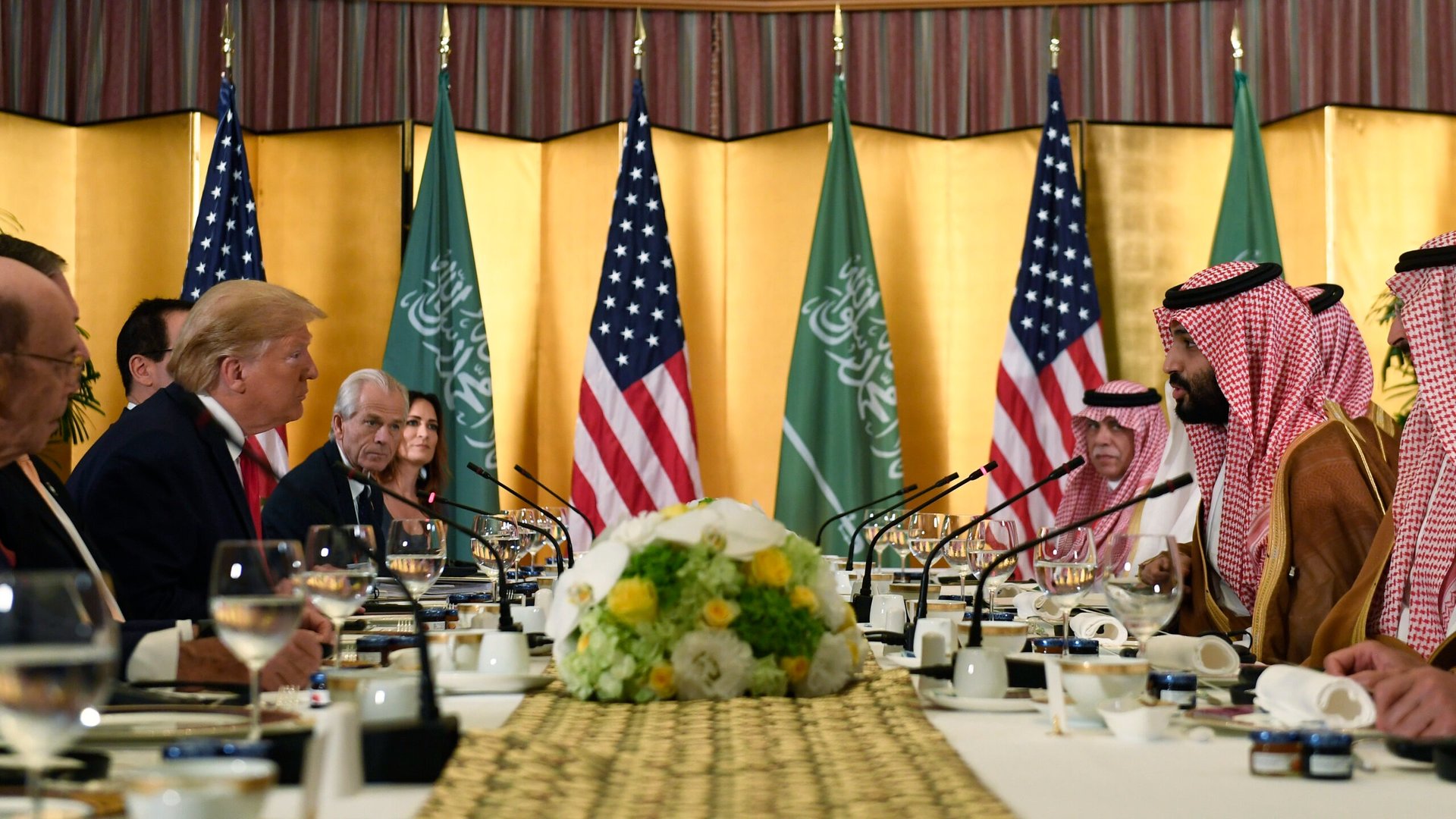
At first glance, Saudi Crown Prince Mohammed bin Salman’s recent visit to Washington might have looked like a classic textbook protocol event: military parades, a 21-gun salute, a horse guards escort, fighter jets flying overhead, and a black-tie dinner at the White House. The guest list alone—featuring everyone from Cristiano Ronaldo and Elon Musk to the top tier of the American political and business elite—hinted that this was no ordinary state visit.
But when you look beneath the surface, it’s clear that Washington was using this grand welcome to send a message: Saudi Arabia is no longer just an important partner; it has become a central pillar of American strategic thinking. The visit didn't just deepen ties between the two capitals; it carried a massive geopolitical message: Riyadh is now a key player in Middle Eastern security, global energy supplies, and even the tech race.
A Palestinian State Within Five Years: A Saudi Condition, Not Just a Slogan
Perhaps the Crown Prince's most critical political message was tied to the Palestinian issue. Instead of settling for the usual vague statements about a "just resolution"—which we've seen so often in the past—he laid out a very concrete, time-bound demand: the United States must provide binding guarantees that negotiations to create a viable Palestinian state will wrap up within five years.
With this, Saudi Arabia is sending an unmistakable signal: normalizing relations with Israel, joining the Abraham Accords, and playing a role in post-war Gaza cannot be separated from making real progress on the Palestinian issue. It’s no longer a matter of "someday when the time is right," but rather a strict, clear timeline.
Another major takeaway was the Crown Prince making it clear that neither Saudi Arabia nor any other Muslim nation will send troops to a post-war international peacekeeping force in Gaza. The logic is simple: Muslim soldiers cannot clash with Hamas without turning their own public opinion and the wider Muslim world against them. In practice, this means that any armed action against Hamas will still fall primarily on Israel—and to some extent its allies—regardless of the international banner under which a future security structure is organized.
The Strategic Defense Pact: Breaking Away from "Quiet Deals"
The real heavy lifting of the visit happened around defense cooperation. The US and Saudi Arabia signed a Strategic Defense Agreement, marking the most significant security pact between the two nations since World War II. This officially replaces the old, often unspoken "oil-for-security" deals with a formalized, long-term, institutional framework.
The American decision to designate Saudi Arabia as a Major Non-NATO Ally carries both symbolic and practical weight. On one hand, it elevates the Kingdom's status and gives it political recognition. On the other, it cuts red tape to speed up weapons purchases and opens the door wide for large-scale defense cooperation. We see this most clearly in the sale of F-35 fighter jets to Saudi Arabia—a move that was considered taboo for years, mainly to protect Israel’s qualitative military edge.
Now, Washington is signaling that Israel’s technological edge will remain secure in the long run, while significantly boosting Saudi defense capabilities actually serves American interests. It strengthens deterrence against Iran and promises stability in the Persian Gulf. The addition of nearly 300 American tanks and advanced air and missile defense systems fits right into this same strategy.
Nuclear Cooperation: Riyadh Bets on American Tech (For Now)
One of the most underestimated yet incredibly significant breakthroughs of the visit was the progress made on civil nuclear cooperation. For years, these talks were essentially frozen—partly due to strict non-proliferation rules, and partly due to regional sensitivities, especially Israel's concerns. Now, however, they’ve managed to ink a framework agreement that paves the way for Saudi nuclear power plants built with American technology, under strict monitoring and full transparency.
With this deal, Saudi Arabia hits multiple strategic goals at once. First, it stabilizes its long-term domestic energy supply while cutting down on internal oil consumption—leaving more oil available for lucrative exports. Second, it sends a clear message to the international community: it wants to pursue its nuclear ambitions in tandem with the United States, rather than relying on Chinese or Russian technology. For the US, this deal is a strong move as well. Washington is making it clear that it has no intention of surrendering the strategic tech market in the Middle East to rival superpowers.
That said, US intelligence is still urging caution. As long as Riyadh maintains major economic and infrastructure ties with Beijing, the risk of technology transfer remains a major concern—especially when it comes to F-35s, cutting-edge AI systems, and advanced semiconductors.
Sudan and Regional Mediation: Riyadh’s New Self-Image
Donald Trump's announcement that the United States is launching a new peace initiative in Sudan at the request of Saudi Arabia says a lot about how Saudi Arabia views itself today. It’s not just an oil exporter or the custodian of holy sites anymore; it’s a regional mediator capable of shaping agendas even in African conflicts.
Riyadh had already been involved in the Sudanese ceasefire talks, but by successfully pulling in American commitment, it has taken the process to the next level. This fits perfectly into the new mindset of Saudi diplomacy: the Kingdom wants to be a dominant player all at once in the Middle East, the Red Sea region, and the Horn of Africa. The message behind the Sudan initiative is simple: if you want a lasting solution to conflicts in this neighborhood, you have to go through Riyadh.
Saudi Arabia in the Changing World Order: The Director, Not an Extra
Looking at the Washington meeting as a whole, it’s obvious that Saudi Arabia is no longer just an extra on the stage of the changing world order—it is actively directing it. The Crown Prince's visit goes far beyond standard bilateral treaties. It demonstrates that Riyadh isn't just adapting to the shift in global power; it wants to shape it. Part of this involves a visible deepening of ties with the US—from defense pacts and nuclear cooperation to AI and microchip deals—all while the Kingdom keeps its options open with China, Russia, and other emerging powers. This kind of multi-vector foreign policy proves that Saudi Arabia has become an independent middle power acting purely in its own self-interest—a nation Washington treats as a premium partner, but doesn't exclusively own.
For the region, this carries even more weight. Israel faces an increasingly obvious dilemma: normalization with Saudi Arabia is only on the table if there is a credible, well-defined path leading to a Palestinian state. Meanwhile, Iran has to contend with a Saudi Arabia that boasts upgraded defense capabilities, tight American backing, and growing diplomatic clout throughout the Middle East and beyond. In the eyes of other Gulf states, Riyadh is cementing its role as the region's dominant superpower—not just economically or when it comes to energy, but politically and strategically as well.
Ultimately, this meeting wasn’t a continuation of the old "oil-for-security" model; it was the start of a brand new era. For the United States, Saudi Arabia is both a necessary partner in its global competition with China and a crucial vehicle for stabilizing the Middle East. And for the region, it’s a clear sign that the future regional order won't be dictated solely by Washington and its traditional allies. Riyadh is no longer just reacting to events around it; it is setting the agenda—from the question of Palestinian statehood and the Sudanese peace process to nuclear and high-tech cooperation. Saudi Arabia has officially entered the club of global geopolitical heavyweights, and its new, more balanced partnership with the United States could very well become one of the defining alliances of the coming decades.
PUBLISHED IN