Where Does Iran’s Auto Industry Fit in the Global Economic Web?
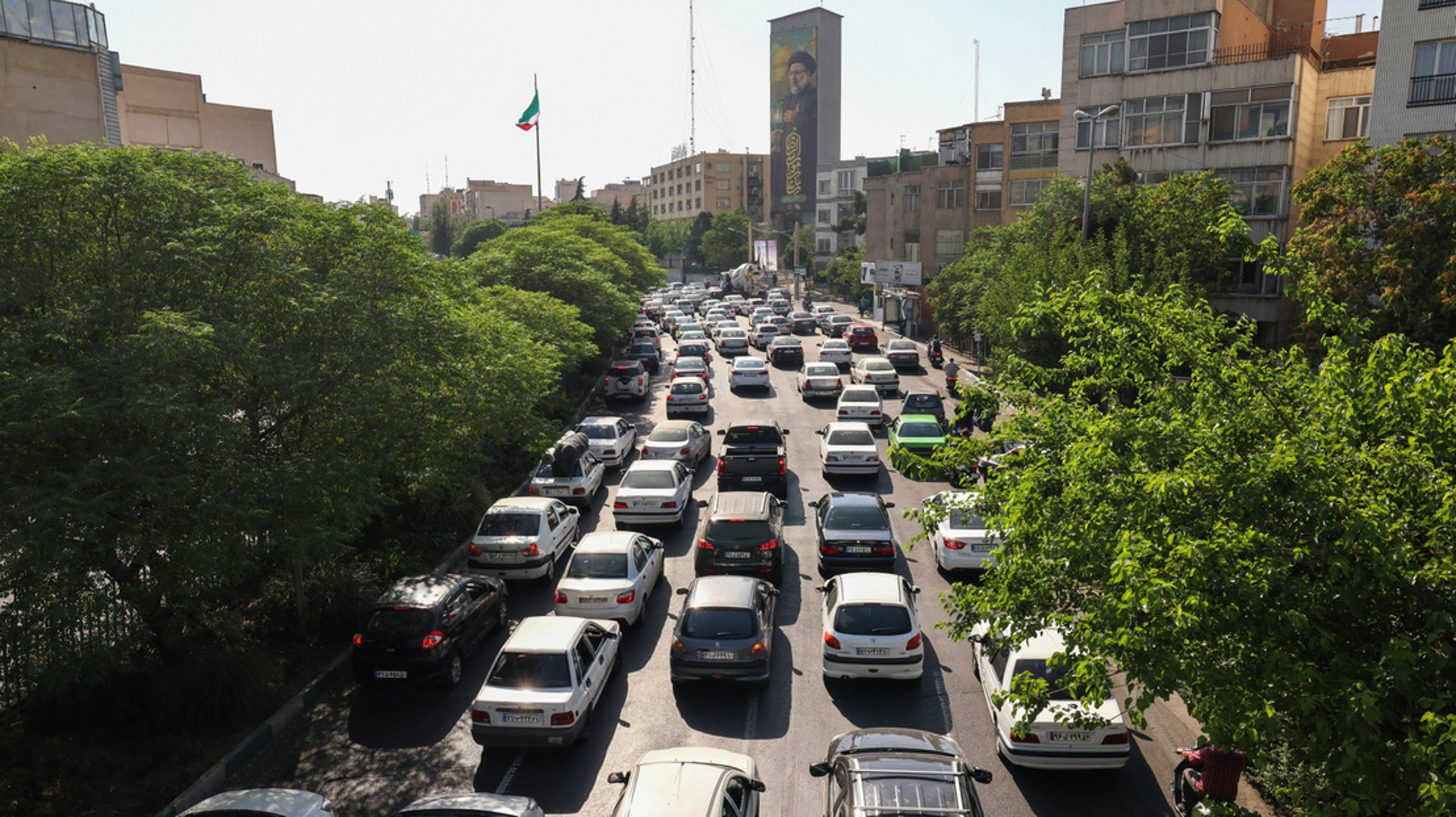
When we think of Iran, it’s usually international political debates, nuclear talks, and sanctions that come to mind. But what’s actually happening in the everyday economy, deep inside the country's factories? How does a nation build up its own automotive industry while being hit with strict trade restrictions for decades? And why should we, as outsiders, even care?
ECONOMICSIRANANALYSIS
7/30/2025
When people think of Iran, international political debates, nuclear negotiations, and sanctions usually come to mind. But what’s actually happening in the everyday economy, deep inside the industrial plants? How does a country build its own auto industry while facing strict trade restrictions for decades? And why should outsiders even care?
In this piece, I want to share a story that is as much about survival and adaptation as it is about the invisible layers of the global economic system. Iran's automotive industry didn’t just survive in isolation; it actually built new kinds of connections with the rest of the world. By the end, we might just find the answer to a bigger question: can you really cut a country off from the global economy entirely?
The Automotive Web: Why the Iranian Example Matters
Car manufacturing is one of the most complex, interconnected industries in the global economy. Designing, building, and marketing a single passenger car often requires cooperation across dozens of countries and hundreds of companies. From the bodywork and the engine to the electronics, every single component moves through multi-stage, cross-continental supply chains before reaching the final assembly plant.
This makes the industry incredibly sensitive to geopolitical shifts, trade wars, or sanctions. When a country like Iran drops out of this system, it’s not just a trade issue—it triggers serious technological, logistical, and social chain reactions. In a situation like that, a country either gets pushed out of the modern world, or it looks for alternative paths. Iran chose the latter, which is exactly why the evolution of its auto industry is so fascinating and tells us so much.
The Foundations: State Backing, Foreign Partners, and a Protected Home Market
The Iranian auto industry didn’t just pop up out of nowhere. Ever since the 1960s, there has been a major political and economic push for the country to have its own vehicle manufacturing capabilities. In the early days, heavy state subsidies, Western technology licensing deals, and a protected domestic market laid the groundwork for two dominant state-owned manufacturers to take over: Iran Khodro and Saipa.
Iran Khodro’s most famous model became the Samand—a local spin-off of the Peugeot 405—while Saipa manufactured millions of local versions of the Kia Pride. For a long time, these models were the absolute backbone of middle-class mobility in the country. It’s worth noting that these operations were entirely license-based: the manufacturing technology, designs, and, in many cases, the parts themselves came from abroad. By the 2000s, French brands like Peugeot and Renault, alongside South Korea’s Kia, had a massive footprint, while Chinese companies were still just minor players. Developing car manufacturing wasn't just an industrial policy goal; it was symbolic. For the Iranian leadership, making cars became a badge of modernity.
The 2015 Nuclear Deal: Brief Hope, Swift Rollback
The 2015 Joint Comprehensive Plan of Action (JCPOA)—better known as the Iran nuclear deal—breathed new life into several sectors of the Iranian economy, especially the auto industry. With sanctions partially lifted, Western partners rushed back in. The French PSA Group set up joint ventures in the country, new investments started pouring in, and manufacturing technologies got a serious upgrade. Training local experts, improving quality assurance, and modernizing logistics infrastructure were all signs that Iran wanted to catch up with its regional competitors—not just in terms of quantity, but quality too. Political leaders set ambitious goals: they wanted to become the largest automaker in the Middle East by 2025.
But that optimism didn't last long. In 2018, US President Donald Trump unilaterally pulled out of the JCPOA and hit Iran with new sanctions, which instantly choked off official business relations again. Fearing American retaliation, Western companies pulled out fast, and car industry collaborations between Iran and Europe practically vanished overnight.
Under the Radar: How Peugeot Lives On in Iran
Even though official partnerships ended, production lines didn’t grind to a halt. Iran Khodro, for instance, just kept right on manufacturing the Peugeot 405 and 206 models. They did it without the original licenses, relying instead on major internal modifications and alternative parts sourcing. Some of those parts still make it into Iran—just not directly from France anymore. Instead, they travel through middleman countries like Turkey, the UAE, or China. The logistics became way more complicated and costs went up, but the system kept running.
According to some sources, an entire intermediary industry cropped up, keeping manufacturing alive through "grey-zone" export-import channels. This model—where an officially broken business relationship lives on informally—perfectly illustrates how a country can creatively reorganize a complex industry even while isolated. The know-how, the human capital, and the existing infrastructure provided a strong enough foundation to keep things moving, even if the quality wasn't quite what it used to be.
China as the Alternative Partner: Seen and Unseen Presence
With Western players out of the picture, China stepped in to fill the void, acting as both a commercial and a strategic partner. Chinese automakers—like Chery, BAIC, Changan, and Dongfeng—offer a wide variety of models to Iran, mostly in CKD (completely knocked down) or SKD (semi knocked down) formats. These kits are assembled in Iranian plants and often rebranded with new names to look like "domestic production."
This isn't just a technical workaround; it’s psychological. Among Iranian buyers, Chinese brands still hold a lower prestige compared to Western models, so rebranding is just part of the local market's unique logic. On top of that, Chinese companies aren't just suppliers anymore; they’ve become investors and developers. We’re seeing more and more Chinese-Iranian joint ventures pop up, and they aren't just looking at assembly lines—they’re exploring partial R&D and even export opportunities into Central Asian or African markets. For China, Iran isn't just an economic partner; it’s a geopolitical ally. Being present in the Iranian auto industry is part of a long-term Chinese strategy to build alternative trade and production axes outside the Western world.
New Import Horizons: EVs and Chinese-Made Western Models
In 2024, Iran relaxed its restrictions on car imports, once again opening the doors to electric, hybrid, and small-engine vehicles. This opened up brand new opportunities, especially for Iranian buyers who wanted Western models but couldn't get their hands on them.
Suddenly, models like the Mercedes-Benz A200 L or the Audi A4L started appearing on the market. But they didn't come from Germany—they came from China. These models are versions manufactured by Western brands’ Chinese joint ventures. Visually and technologically, they are identical to the German originals, but they take a much more "politically neutral" shipping route and land on the Iranian market about 30 to 50 percent cheaper. This kind of re-exporting—importing Chinese-built Western cars—is a brilliant response to sanctions. Legally, it doesn't break any embargoes, technologically it stays cutting-edge, and it satisfies consumer demand.
The Takeaway: Not Cut Off, Just Reorganized
Iran's example clearly shows that international sanctions don't necessarily mean a country gets completely locked out of the global economy. Instead, they force the target state to completely reorganize its economic ties and hunt for alternative routes and partners. In the case of the Iranian auto industry, the sector didn’t collapse when its official Western partners walked away. Instead, it adapted, finding new ways to plug into global value chains through indirect, informal, or third-country channels.
This kind of hidden integration might be less obvious and far less transparent than official corporate partnerships, but it runs on very real, highly functional mechanisms. Iran didn't vanish from the global economic map; it just restructured its place on it. And the lessons from this process offer a lot of food for thought for other countries finding themselves in a similar boat.
PUBLISHED IN
ÖT: https://ot.hu/ujvari-barbara/iran-szankcio-kreativitas-auto-autoipar-globalis-gazdasag/
INDEX:https://index.hu/gazdasag/2025/07/30/iran-autoipar-globalis-trendek-nemzetkozi-szankciok/